Reasons Your Sarasota Google Maps Ranking Isn’t Working
10 Reasons Your Sarasota Google Maps Ranking Isn’t Working (And How to Fix It)
![[HERO] 10 Reasons Your Sarasota Google Maps Ranking Isn’t Working (And How to Fix It)](https://cdn.marblism.com/X5c5qrRuKbw.webp)
BETTER MAPS VISIBILITY. MORE LOCAL LEADS. FEWER GUESSWORK FIXES.
WHY SOME SARASOTA BUSINESSES STRUGGLE IN GOOGLE MAPS
Most Sarasota businesses that struggle in Google Maps are not dealing with one dramatic failure. It is usually a trust problem built from several smaller weaknesses. The listing may be verified, but the categories are off. The reviews may be decent, but the website is slow. The business may serve Sarasota, but the online signals are spread across too many cities, too many variations of the name, or too many low-quality directories. Google sees all of that together.
That is the part a lot of business owners never get told clearly enough. Local rankings are not really about “hacks.” They are about whether Google believes your business is the best answer for a local search at a specific moment. That belief is built from consistency, relevance, proximity, engagement, and the quality of the business’s web presence around the listing. In a market like Sarasota, where multiple companies may offer the same service in the same zip codes, small signal differences can decide who shows up in the map pack and who disappears below it.
1. YOUR BUSINESS NAME IS CREATING DISTRUST INSTEAD OF RELEVANCE
Business owners often try to squeeze extra ranking power into the title of the Google Business Profile. On the surface, that sounds logical. If people search “electrician Sarasota,” why not put “Sarasota electrician” into the name? The problem is that Google treats the business name as an identity field, not an ad space. If the listed name does not match the real-world brand, the profile starts to look manipulated.
That mismatch matters more than people think. Your signage, website header, invoices, citations, and Google Business Profile should all point to the same identity. When they do, Google gets a clean signal. When they do not, the listing starts leaking trust. If you want the deeper nuts-and-bolts side of profile setup, this is also where mistakes tend to overlap with the kinds of issues covered in Google Maps Mastery: Dominating the Local Pack in Sarasota and Orlando. A messy profile rarely has just one messy element.
2. YOUR CORE BUSINESS DATA IS NOT CONSISTENT ENOUGH TO SUPPORT LOCAL RANKINGS
Name, address, and phone consistency still matters because Google is constantly comparing sources. It looks at your site, your profile, your directories, your chamber listing, and other citation sources to decide whether the business information is stable. If one version says “Suite 4,” another says “#4,” another uses a tracking number, and a fourth shows an old address, you are introducing uncertainty where you need clarity.
This is one of the least glamorous parts of local SEO, but it is one of the most important. Businesses often want to skip ahead to content, reviews, or ads because those feel more visible. The issue is that weak foundational data keeps every other effort from reaching full strength. If the goal is long-term visibility in this market, the groundwork has to be solid. That is why any serious push for Sarasota local SEO starts with data consistency before moving into authority building.
3. YOUR GOOGLE BUSINESS PROFILE IS ACTIVE, BUT NOT ACTUALLY WELL-MANAGED
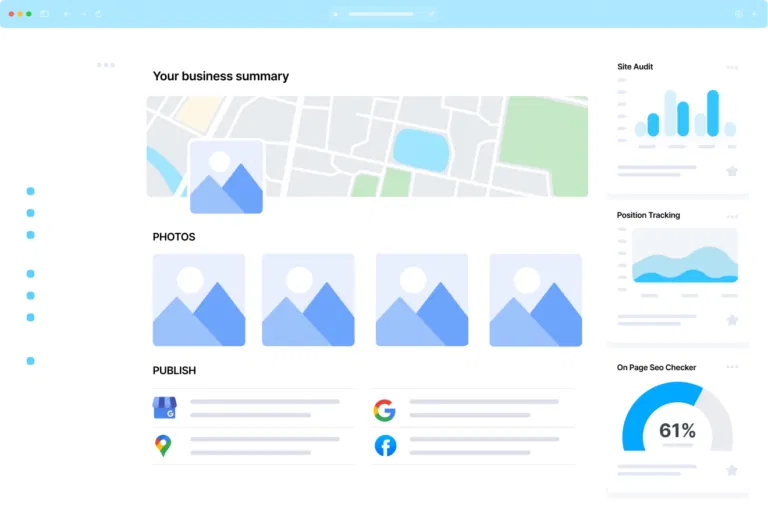
A claimed profile is not the same as a well-managed one. Plenty of businesses verify the listing, upload a logo, and then stop touching it for a year. From the owner’s point of view, the profile is “done.” From Google’s point of view, it may look stale, incomplete, or lightly maintained.
Good profile management is less about gaming the system and more about removing doubt. Hours need to be current. Categories need to match the business precisely. Service descriptions should be accurate. Photos should show the real business, not filler. Questions should not sit unanswered forever. Reviews should be responded to like a real operator is paying attention. A Google Business Profile becomes stronger when it looks alive, current, and believable, because that is what users trust too.
4. YOUR WEBSITE AND LOCAL FOOTPRINT ARE NOT GIVING GOOGLE ENOUGH CONFIDENCE
Google Maps rankings are not produced by the profile alone. The website tied to the listing helps validate location, services, expertise, and user experience. Reviews help. Local links help. Mentions from relevant local organizations help. The map listing is one piece of a wider local authority picture.
This is where a lot of Sarasota businesses plateau. They get the profile in decent shape, then expect it to carry all the ranking weight by itself. It usually cannot. The businesses that tend to win locally are the ones with aligned signals across the profile, website, reviews, and local references. When all of those point in the same direction, Google has a stronger reason to put that business in front of searchers.

5. YOUR CATEGORY STRATEGY IS BLURRING WHAT YOU ACTUALLY DO
Categories are one of the clearest relevance signals in a Google Business Profile, yet they are often treated casually. If the primary category is too broad, too generic, or just slightly wrong, the listing becomes less competitive for the exact searches that matter most.
A Sarasota electrician should not settle for a broad label if a precise one exists. The same logic applies to attorneys, dentists, med spas, roofers, restaurants, and every other local business type. Precision helps Google understand intent. It also helps users feel they found the right match faster. When category strategy is weak, the rest of the profile has to compensate for a basic classification problem that should have been handled correctly from the start.
6. YOUR SERVICE AREA IS TOO WIDE TO FEEL CREDIBLE
One of the most common local ranking mistakes is trying to rank everywhere at once. Business owners expand the service area because it feels like a growth move, but broad settings often weaken local focus instead of expanding it. If the profile says you serve half the state, Google has less reason to trust you as the best nearby answer in a specific Sarasota search.
Tighter targeting is usually stronger targeting. If most of your real work comes from Sarasota and nearby areas, the profile and the supporting pages should reflect that honestly. You are not limiting opportunity by being realistic. You are making the business easier for Google to understand geographically. Clear service boundaries tend to produce better relevance than inflated coverage claims.
7. YOUR OFFLINE REALITY DOES NOT FULLY MATCH YOUR ONLINE SIGNALS
Google has gotten better at comparing what a listing claims with what the wider web and real-world signals suggest. That does not mean business owners need to panic about every platform update. It means the business should be easy to verify. Real photos. Real branding. Real hours. Real customer feedback. Real service information.
When those signals line up, rankings usually become more stable. When they do not, volatility shows up. A business with polished marketing but weak real-world evidence can look less trustworthy than a simpler business with clearer proof of legitimacy. In local search, believable often beats overproduced.
8. YOUR CONTENT DOES NOT SOUND LIKE IT REALLY KNOWS SARASOTA
Sarasota searches are rarely just generic city searches. People search by neighborhood, island, district, and local intent. They look for businesses near Siesta Key, downtown Sarasota, Fruitville, Lakewood Ranch, and other nearby areas based on where they live or where they need the service. If your website and profile never reflect that local context, you miss easy relevance.
The key is not stuffing neighborhood names into every line. The key is sounding like a real local business that actually works in those places. Good local content reflects service patterns, common jobs, familiar landmarks, and actual customer intent. That is the kind of relevance that earns trust instead of looking manufactured.

9. YOUR WEBSITE IS WEAK ENOUGH TO DRAG DOWN THE LISTING
This is where many local campaigns quietly stall out. The profile gets attention, but the linked website is slow, thin, hard to navigate, or unclear about services and locations. From a ranking standpoint, that matters. From a conversion standpoint, it matters even more. If users click through and bounce because the site is clunky or confusing, that weakens the overall local performance picture.
A strong local site should load quickly, work cleanly on mobile, and make it obvious what you do, where you do it, and how to contact you. Structure matters. Internal page hierarchy matters. Local landing page quality matters. If your site is getting in the way, not helping, it is worth investing in a better website design approach that supports both search visibility and lead generation.
10. YOUR COMPETITORS ARE NOT NECESSARILY BETTER—THEY ARE JUST MORE CONSISTENT
Sometimes the frustrating truth is that your competitors are not smarter and they are not delivering better service. They are simply more active. They ask for reviews more often. They upload better photos. They keep their profile cleaner. They improve service pages. They earn local mentions. They create momentum, and Google notices momentum.
That does not mean every business has to wait six months for SEO to mature before seeing movement. If you need leads faster while the organic side is being cleaned up, paid search can fill the gap without replacing the long-term value of local SEO. For businesses that need quicker visibility while rankings improve, PPC management services can help create near-term lead flow while the foundational local work catches up.

WHAT TO FIX FIRST
If your Sarasota Google Maps ranking is underperforming, the smartest move is not to chase tricks. Start by tightening the parts of the business Google uses to decide whether you are trustworthy, relevant, and worth showing. Clean up the name. Standardize your business data. Improve the profile. Narrow the service focus. Strengthen the website. Build review velocity. Support the listing with real local authority.
That is what makes a map ranking strategy durable. Not gimmicks. Not one-time optimization. A business that is easy for Google to verify, easy for customers to trust, and easy for users to understand will usually outperform one that is trying to look bigger than it really is. In a competitive local market like Sarasota, that difference is often what separates the listings that show up from the ones that stay invisible.
REGIONAL SERVICE AREA DOCUMENTATION
For businesses expanding beyond Sarasota, ensure localized profiles are established for the following regions:
Comments
Post a Comment